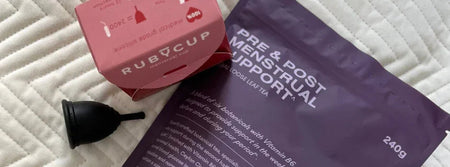


Being up close and personal with your monthly flow can take some getting used to – especially if you are a menstrual cup newbie. At Ruby Cup, we get lots of questions about slimy period blood, stringy menstrual blood, and mucousy periods. We love helping people with periods better understand their menstrual cycles, so we’re thrilled to answer all your period blood questions. Keep reading to figure out why your menstrual blood is slimy, what is normal, and what is not.

Is menstrual blood the same as regular blood?
No. Menstrual blood is much more than just blood. Normal blood consists of:
- Plasma
- White blood cells (infection fighters)
- Red blood cells (oxygen transporters)
- Platelets (clot formers),
- Water.
Your menstrual flow is thicker than water or regular blood. Besides all of the ingredients listed above, it also has:
- Tiny pieces of tissue from your womb lining, which is called the endometrium
- Secretions from the cells lining your vagina
- Fluid produced by the cells lining the opening to your womb, called the cervix
- Blood from your veins
- Tiny proteins and cells from inside your womb

What can make your period flow look or feel different?
There are several different reasons why your period flow could look or feel different, such as:
- Hormones
- Using hormonal birth control such as oral contraceptive pills or an IUD
- Using menopause hormone therapy, sometimes called HRT
- How much water and caffeinated beverages you drink
- The type of menstrual product you use
- How heavy your flow is
How do hormones affect my period blood?
Remember that shifts in hormones in your body each month trigger your womb to shed its lining if you are not pregnant. The lining of your uterus is called the endometrium. The hormone estrogen stimulates your lining to grow and thicken throughout your monthly cycle. This fluffy, cozy endometrium’s purpose is to provide the perfect, nourishing home for a fertilized egg to implant, if you get pregnant. If it is not your month to become a parent (the egg is not fertilized), a drop in another hormone (progesterone) signals the lining to start sloughing off. Tiny pieces of this tissue lining can give period flow a slimy consistency that is totally normal.
Hormones determine how thick this lining becomes and how often you shed it. You may have noticed that your period flow is heavier if your menstrual cycles are longer (more days in between periods). This is because the lining has had more time to build up.
The NHS defines irregular cycles as those shorter than 21 days or longer than 35 days. Some of the common causes of irregular cycles are:
- You are just starting to have your period (puberty)
- Perimenopause and menopause
- Using hormonal contraception or changing hormonal contraception time (i.e., pill to IUD)
- Pregnancy
- Losing or gaining a lot of weight
- Exercising too much
- Stress or anxiety
We unpacked how some of these factors change the length of your cycle in our post about how to make your period end faster.
It is helpful to keep track of your periods in a calendar, a diary, or a phone app. That way, you can start to notice what is normal for you and pick up on any changes. If you have irregular cycles for longer than 3-4 months, it is a good idea to schedule an appointment with a healthcare provider.
Did you know that the type of hormonal birth control you use can change your period flow?
There are two categories of birth control:
- Hormonal
- Non-hormonal
Examples of birth control methods without hormones are condoms, diaphragms, and the copper IUD. Birth control methods with hormones include:
- Birth control pills
- The implant
- The patch
- The ring
- The hormonal (levonorgestrel) IUD
- The injection or “shot”
Depending on which hormones your birth control has (and how much), you may notice your period flow could be heavier or lighter. You might notice that the color and consistency (slimy or not) of your flow change with different hormonal birth control methods.
Research shows that birth control pills and IUDs even change how much water vs. blood there is in menstrual flow, making it thicker or more viscous. Healthcare providers often turn to birth control pills, and especially the hormonal IUD, to help people with heavy flow.
Because birth control pills and the hormonal IUD decrease the thickness of the endometrial lining over time, your flow may be shorter and lighter. You may have fewer clots and notice that your blood becomes thicker, pasty, and brownish in consistency. Whenever blood is exposed to oxygen it turns brown in a process called oxidation. With a lighter flow and less lining to shed, it takes longer for the blood to leave your body through your cervix and vagina, so it has more time to oxidize.
Why is my menstrual blood slimy if I take the mini pill?
The mini pill only contains one hormone called progesterone. Progesterone limits how thick your womb lining becomes over your menstrual cycle. Progesterone also thickens the secretions from your cervix, so much so that they can form an effective mucus plug to keep sperm out and prevent pregnancy. So, these thicker mucus secretions from both your vagina and cervix, combined with thinner tissue from your endometrium, may cause your menstrual flow to seem very different with the mini pill. The lighter flow also takes longer to leave your body, so your menstrual blood is more likely to be brownish and paste-like rather than liquid.
Why is my menstrual blood slimy if I have an IUD?
The answer depends on which type of IUD you have. There are two types of IUDs available. The first contains no hormones and is made of plastic wrapped in copper. People with a copper IUD (Paragard, Copper-T) tend to have heavier periods, especially for the first year. With a heavier flow, you are more likely to notice slimy, coagulated blood or clots, especially if you are using a period cup to collect your menstrual flow.
The second type of IUD on the market contains a synthetic version of the hormone progesterone. Progesterone directly blocks the growth and thickening of your uterine lining during your menstrual cycle. Most people with a hormonal IUD will have less menstrual blood, fewer clots, and less-slimy menstrual flow. Instead, it might be a thicker, browner, paste-like consistency. It is normal for some people with hormonal IUDs to stop growing a lining altogether, and therefore not have any menstrual flow.
Hydration and menstrual blood
How hydrated you are may potentially impact the consistency of your period blood. Just like your snot dries up, or your mouth can feel like sandpaper if you are dehydrated, the water content of your blood changes if you haven’t been refilling your water bottle enough. If you are having heavy menstrual flow, you are also losing fluid through that flow, so it can help you feel better to drink plenty of non-caffeinated beverages on your heavy period days.
Read also: How Much Do You Bleed on Your Period? What Research Says
Why is menstrual blood slimy and is it normal if it’s gooey?
Yes. Slimy period blood is normal. It is also normal that your menstrual flow may look and feel different from the blood you might see, say if you cut yourself shaving or you scrape your knee.
That is because those secretions from the vagina and cervix mentioned above contain mucin. You have mucin-secreting cells lining your throat, nose, uterus, and the canal through your cervix. Mucin is what makes your snot slimy when you get a cold. It also makes your menstrual blood seem slimy on some days of your cycle.
The relative amounts of menstrual blood ingredients change each day of your period. That is why the first few days of your period, your flow is usually more like a liquid, followed by a thicker (maybe gooey-er) stage, and finishing with the clearer, milky liquid of normal vaginal discharge.
Vaginal infections such as bacterial vaginosis or thrush (yeast infection) do not typically cause changes in the consistency of your period blood. It is not normal to have slimy blood with a smell (a question asked by some of our cup users). Yes, period blood may smell different than your normal, healthy vaginal discharge smells. You should call your GP or healthcare provider if your period flow:
- Smells foul or differently than it normally does
- Comes with itching, burning, or pain
- Is thicker than usual
- Is a different color than usual
These can all be possible signs of vaginal infection, also called vaginitis.
Read also: Can I Use My Menstrual Cup After A Vaginal Infection?
Does using a menstrual cup make my period blood slimy?
No, menstrual cups, like Ruby Cup, do not cause gooey or stringy menstrual blood, even though you may see more slimy clots in your menstrual cup. And cups don’t cause you to have more clots. Instead, period cups hold more blood and provide a space for it to collect in.
Keep in mind that:
- Ruby Cup’s Size Small menstrual cup holds 1-2 tampons of menstrual blood
- Ruby Cup’s Size Medium holds 3-4 tampons of normal period flow.
Your blood is designed to become sticky and form clots, which are like your body’s internal Band-Aids. Without clots, you could lose dangerous amounts of blood. You may see these clots when you empty and change your cup. As your menstrual blood pools in your cup (safely for 6-8 hours to avoid toxic shock syndrome), the clots that form may cause slimy, stringy period blood or gooey menstrual flow, as our cup users have reported.

Because tampons and menstrual pads are super absorbent, your menstrual blood does not have time to form clots as it does hanging out in your menstrual cup. So, your menstrual cup does not change your menstrual flow in terms of the amount of flow or composition of your period blood – you just see more of your flow (and clots).
When should I worry about the blood clots in my menstrual cup?
Having some slimy clots in your menstrual cup is normal. Blood clots in other parts of the body can be harmful (such as in your lungs or brain). As long as they are not too big or there are not too many, you don’t need to worry about blood clots in your menstrual cup.
The blood clots in your menstrual flow can seem especially slimy and almost jello-like because they combine coagulated blood (blood that is semi-solid, partially clotted), tissue, and blood that has not yet clotted. It is normal for people with periods to have more clots during the first couple of days of their cycle when flow is heaviest.
So what is too big when it comes to clot size? The American College of Obstetricians and Gynecologists (ACOG) says that normal-sized clots range pea-sized to the size of an American dime coin or UK 10p coin. If your clots frequently measure more than 2.5 centimeters (about the size of an American quarter or a strawberry), it is best to check in with your GP or healthcare provider.
Other signs of worrisome heavy menstrual bleeding to discuss with a healthcare professional are:
- Having many larger-sized clots beyond the first day or two of your period
- Having to change your tampon, menstrual pad, or menstrual cup every two hours or less for several hours in a row.
- If you bleed heavily for several hours at a time
- Your period lasts longer than 7 days
- You avoid exercise, leaving the house, or have to take time off from work because of your period
- You have to use more than one period product at a time to prevent leaks
- You have signs of anemia (low iron), such as shortness of breath, dizziness, or feeling tired all of the time.
If you are worried about your heavy period flow or clots, talking with your GP or healthcare provider can help identify some of the possible causes of heavy periods. Your provider may do tests or screenings to identify other causes such as:
- A thyroid disorder
- A condition that makes you bleed more easily, such as Von Willebrand disease
- GYN conditions of the uterus such as a polyp, adenomyosis, or endometriosis
- Polycystic ovarian syndrome
- Perimenopause or menopause
- A pregnancy or miscarriage
How does period underwear work with blood clots?
Period underwear works with blood clots in much the same way it handles regular period flow. The absorbent layers soak up the liquid from the clot and help prevent leaks, keeping you dry and comfortable. If you tend to have larger blood clots, they might not be fully absorbed, and some clot tissue may stay on the surface. In this case, you can simply wipe it off when you go to the toilet or rinse the underwear before washing.

Since clots usually indicate a heavier flow, it's best to choose period underwear with heavy absorbency, like our high-waisted Flow Freedom period panties. They have been thoughtfully designed for ultimate comfort and dependability—able to hold up to three tampons’ worth of flow. This means they’re perfectly suited for heavy days or for long hours of wear without a worry. The soft, breathable fabric and sustainable design not only provide discreet, leak-proof protection but also let you move confidently, embracing your natural rhythm with ease.
While menstrual blood’s natural sliminess is simply part of your body’s normal menstrual cycles each month, having period products that work in harmony with your flow makes a huge difference.
Period products face-off: which one works best for blood clots?
| Product |
Capacity |
Clot Handling | Comfort | Best For |
|---|---|---|---|---|
| Tampons | ★★★☆☆ | May struggle with larger clots | Can feel dry or irritating, higher risk of toxic shock syndrome if using super absorbency | Active days, light to medium flow |
| Pads | ★★★☆☆ | Absorbs clots | Bulky and messy | Overnight use, emergency backup |
| Ruby Cup menstrual cup |
★★★★★ | Catches all clots internally | Very comfortable - you'll forget it's even there | Confident, leak-free days, sustainable choice, accurately measuring your flow |
| Period Underwear | ★★★★★ | Absorbs small clots & fluid together | Feels like regular underwear | Heavy flow, comfort-first days, backup with cup, period newbies not comfortable with cups or tampons, planet-friendliness |
Is menstrual blood dirty or harmful?
No. There’s a common misconception that period blood is dirty or impure. Menstrual blood contains sloughed-off tissue, healthy bacteria from your vagina, and discharge from your cervix and vagina that can actually help fight off infections. None of these substances are harmful, unless they are trapped inside your body in a tampon or menstrual cup for too long, as can happen with toxic shock syndrome (TSS).
Toxic shock syndrome is rare – Out of 100,000 people with periods, less than one person each year will get TSS. Toxic shock syndrome only happens if bacteria from your skin, nose, or mouth get onto your tampon or menstrual cup (from non-clean fingers) and become trapped in your vagina for too long (longer than 12 hours).
If you change your menstrual cup and tampons frequently, wash your hands well before and after changing them, and properly sanitize your menstrual cup at the end of each period, your risk for toxic shock syndrome is extremely low. It is not your period blood (or even the healthy bacteria from your vagina) that causes these toxic infections.
So, while it is healthy to remove menstrual blood from your body, menstrual blood in and of itself is not dirty, harmful, or dangerous.
Our mission is to provide people with better periods. With correct information, you can have a better period with fewer worries. Like knowing that it is perfectly normal and healthy for your menstrual blood to be slimy – that can help put your mind at ease. We love how Ruby Cup users know the ins and outs of their period flow in a way that tampon or pad users don’t. We are here to reassure you that it is normal for period blood flow to come in various colors and consistencies. We are here to support you in learning how to have safer, healthier, and easier periods using your Ruby Cup.